
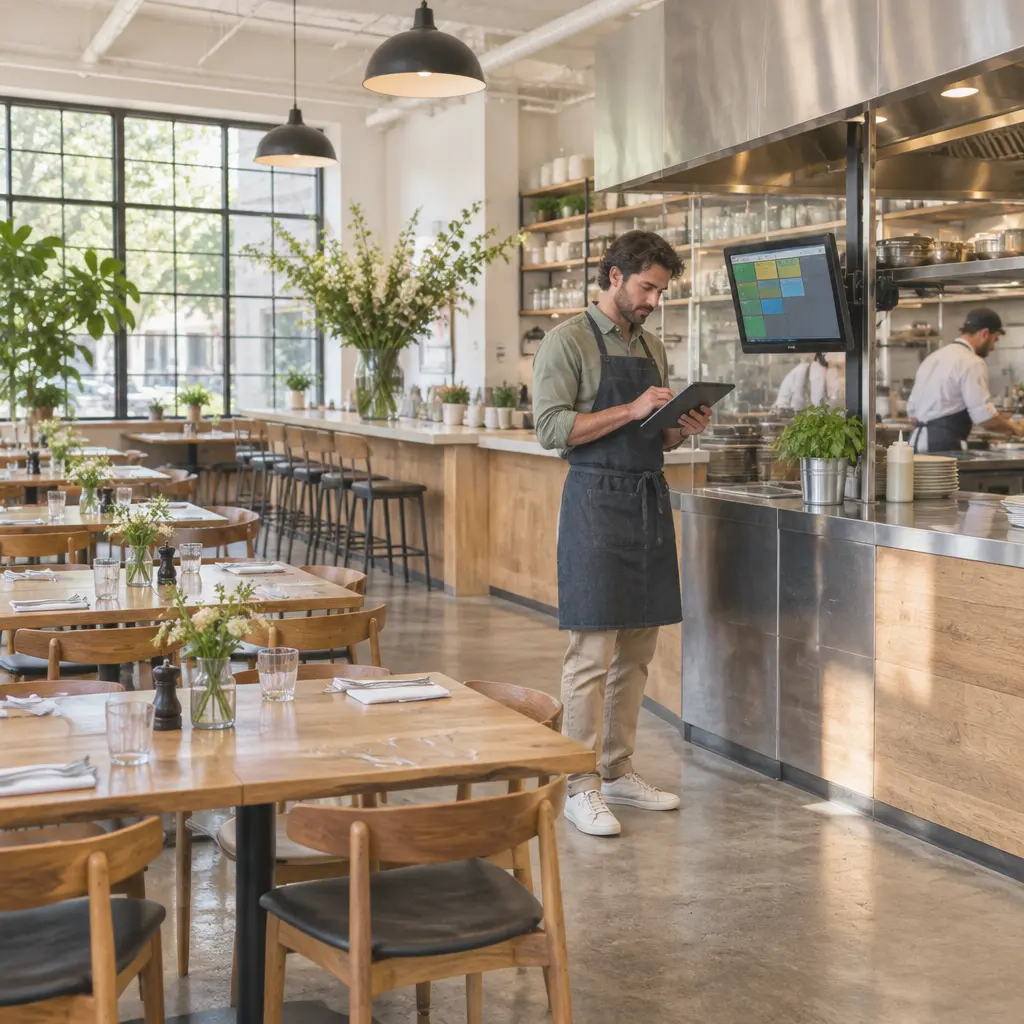
Tech-driven dining experiences use digital tools, automation, and data to change how restaurants serve guests, prepare food, and manage operations. Their rise is visible in the spread of online ordering, contactless payment, delivery platforms, self-service kiosks, and AI-enabled systems. The National Restaurant Association reported that 47% of U.S. adults had used a restaurant’s website or app to order takeout or delivery in its 2024 industry research, underscoring how digital convenience has become part of everyday dining. This article defines the technology-driven dining model, examines its main forms and benefits, considers the trade-offs, and looks at real-world applications and practical next steps for restaurants.
Technology-Driven Dining Experiences Transform Restaurant Service
A technology-driven dining experience is a restaurant interaction in which digital or automated tools materially shape ordering, payment, food preparation, delivery, or guest communication. It can include customer-facing systems, such as mobile ordering, as well as behind-the-scenes systems for inventory, scheduling, and kitchen coordination. The defining feature is not simply having technology on-site: it is using connected tools to make dining more convenient, consistent, personalized, or efficient.
Restaurants have strong reasons to explore these systems. The U.S. Bureau of Labor Statistics reported that food services and drinking places employed about 12.3 million people in 2023, while operators continue to manage labor availability, changing customer habits, and cost pressures. Digital tools can help address some operational demands, but they also require investment, staff training, cybersecurity safeguards, and a service approach that does not exclude guests who prefer human assistance.
Digital Ordering Defines Technology-Driven Dining Experiences
Digital ordering is the use of a website, app, kiosk, or other electronic interface to browse a menu, customize a meal, submit an order, or pay. The National Restaurant Association’s 2024 research found that nearly three-quarters of adults considered technology important to restaurant experiences, while online ordering and payment tools were among the technologies consumers reported using. Digital ordering is therefore a broad category rather than a single product: it includes direct restaurant channels and third-party marketplaces, each with different effects on customer data, fees, and brand control.
Mobile Apps and Online Ordering
Mobile and web ordering let customers place orders before arriving, choose pickup or delivery, and often save preferences for future visits. These channels can shorten queues and reduce the need to repeat an order at a counter. Loyalty accounts and order histories may also support relevant offers, provided restaurants obtain appropriate consent and explain how customer information is used.
Third-party delivery marketplaces extend a restaurant’s reach, but convenience can come with commissions and reduced ownership of the customer relationship. Restaurants commonly compare marketplace visibility with direct ordering, where they retain more control over branding and customer communications. The best mix depends on the restaurant’s location, margins, delivery capacity, and customer base.
Self-Service Kiosks and QR-Code Menus
Self-service kiosks allow guests to place and customize orders without speaking to a cashier, while QR-code menus provide a digital menu through a guest’s phone. Both can make menu updates easier and may help manage busy periods. Kiosks can also prompt customers to review add-ons, although upselling should not obscure prices or make ordering more difficult.
These systems work best when customers have alternatives. A printed menu, accessible counter service, and staff assistance remain important for guests who lack a smartphone, have disabilities, prefer personal interaction, or encounter technical problems. Digital convenience should broaden access rather than become a condition for receiving service.
Automation Connects Technology-Driven Dining Experiences to Kitchen Operations
Restaurant automation refers to software or machinery that performs, coordinates, or supports repetitive tasks in food production and service. Examples include kitchen display systems, automated beverage equipment, robotic food preparation, and software that routes orders among stations. These tools are related to digital ordering, but they serve a different part of the experience: they help turn a submitted order into a prepared and delivered meal.
Kitchen Display and Order-Management Systems
A kitchen display system replaces or supplements printed tickets with screens that show incoming orders, preparation steps, and timing. When integrated with point-of-sale and online ordering systems, it can reduce manual re-entry and help staff coordinate work across stations. The operational benefit depends on accurate menus, reliable connectivity, and clear procedures for exceptions such as substitutions, allergy notes, or canceled orders.
Robotics and Automated Food Preparation
Robotic systems perform specific tasks such as frying, dispensing ingredients, or assembling standardized menu items. They are most feasible where tasks are repetitive, production volumes are predictable, and the equipment can be cleaned and maintained safely. Automation can support consistency and reduce exposure to hot or repetitive work, but it does not eliminate the need for people to supervise quality, handle unusual requests, and maintain equipment.
The broader labor context matters: the National Restaurant Association has repeatedly identified labor costs and recruitment as significant operator concerns. However, claims that a particular robot will reduce labor costs should be evaluated against purchase price, installation, maintenance, energy use, downtime, and the effect on the rest of the workflow—not just the task it automates.
Data and Artificial Intelligence Personalize Technology-Driven Dining Experiences
Restaurant data systems collect and analyze information such as sales, inventory, demand patterns, and customer preferences. Artificial intelligence (AI) refers to computer systems that perform tasks associated with capabilities such as prediction, pattern recognition, or language generation. In restaurants, these methods may support demand forecasting, menu recommendations, staffing plans, and customer-service tools. Their value depends on reliable data, human oversight, and transparent handling of personal information.
Personalized Recommendations and Loyalty
Personalization uses information such as past orders, stated preferences, or loyalty activity to tailor recommendations and offers. A restaurant might suggest a frequently ordered side dish or provide an offer based on a customer’s preferences. These systems can make digital experiences more relevant, but restaurants should avoid implying that an inferred preference is certain and should provide simple ways to manage marketing choices.
Predictive Analytics for Demand and Inventory
Predictive analytics uses historical and current data to estimate future outcomes, such as demand by daypart or the ingredients needed for a service. Better forecasts may help managers schedule staff and reduce over-ordering or stockouts. Forecast quality can deteriorate when conditions change—for example, during a local event, severe weather, a menu change, or an unexpected supply disruption—so managers need to review automated recommendations rather than treating them as guarantees.
Benefits and Risks Shape Technology-Driven Dining Experiences
Technology can improve speed, order accuracy, operating visibility, and convenience, but those benefits are not automatic. A failed payment, inaccessible interface, inaccurate digital menu, or poorly integrated ordering system can make a meal less convenient. Restaurants should assess technology as part of the complete guest and employee experience, not as an isolated purchase.
Convenience, Consistency, and Operational Insight
Digital channels can let guests order when and how they prefer, while connected systems may provide managers with more timely information about sales and workflow. Standardized order capture can reduce errors caused by illegible tickets or repeated manual entry. When systems share data reliably, operators can better identify bottlenecks and adjust menus, staffing, or preparation processes.
Privacy, Cybersecurity, and Accessibility
Customer accounts, payment data, and order histories create responsibilities around privacy and security. The Federal Trade Commission advises businesses to collect only the information they need, protect it, and dispose of it securely when it is no longer required. Restaurants should also use reputable payment providers, restrict staff access to sensitive data, keep systems updated, and prepare a response plan for suspected breaches.
Accessibility is equally important. The U.S. Department of Justice explains that businesses open to the public have obligations under the Americans with Disabilities Act, including effective communication and access to services. Restaurant interfaces should be usable with assistive technology, offer readable text and clear navigation, and provide a non-digital route to ordering. These measures also help guests with limited connectivity, low digital confidence, or language needs.
Restaurant Examples Illustrate Technology-Driven Dining Experiences
Restaurant deployments show how technology can be matched to a particular service model. Starbucks has used its mobile app for ordering, payment, and rewards, linking a digital channel to its in-store pickup process. Domino’s has invested in digital ordering and order tracking across its delivery and carryout business. These examples illustrate the range of applications, but they do not prove that every restaurant will achieve the same results: scale, menu design, customer habits, and local operations all affect performance.
A useful way to compare implementations is to track both operational and guest outcomes. The following metrics can be reviewed before and after a system is introduced:
- Order completion time and queue length during peak periods.
- Order accuracy, refunds, and remakes.
- Digital-channel adoption, repeat visits, and customer satisfaction.
- Labor hours per transaction, equipment downtime, and total cost of ownership.
- Accessibility feedback, privacy complaints, and security incidents.
A simple chart comparing these indicators by week or service channel can reveal whether a new tool improves the experience or merely shifts work elsewhere. For example, faster ordering may still create kitchen delays if order routing and preparation capacity are not improved at the same time.
Conclusion: Building Better Technology-Driven Dining Experiences
Technology-driven dining experiences combine digital ordering, automation, data analysis, and AI to shape how guests interact with restaurants and how teams deliver meals. Mobile ordering and kiosks can add convenience; kitchen systems and robotics can support production; and analytics can inform personalization, inventory, and staffing. Their broader implications include new expectations for service, increased responsibility for privacy and accessibility, and the need to balance efficiency with human hospitality.
Restaurant operators considering these tools should begin with a specific service problem, consult employees and guests, pilot a limited solution, and measure outcomes against clear targets. Further reading from the National Restaurant Association, Federal Trade Commission, and U.S. Department of Justice can help decision-makers understand industry trends, data protection, and accessibility obligations.
Sources: National Restaurant Association, 2024 State of the Restaurant Industry Report, https://restaurant.org/research-and-media/research/research-reports/state-of-the-restaurant-industry/; U.S. Bureau of Labor Statistics, Industries at a Glance: Food Services and Drinking Places, https://www.bls.gov/iag/tgs/iag722.htm; Federal Trade Commission, Protecting Personal Information: A Guide for Business, https://www.ftc.gov/business-guidance/resources/protecting-personal-information-guide-business; U.S. Department of Justice, ADA Requirements: Effective Communication, https://www.ada.gov/resources/effective-communication/; Starbucks, Starbucks Stories: Mobile Order & Pay, https://stories.starbucks.com/stories/2015/starbucks-mobile-order-pay/; Domino’s Pizza, 2023 Annual Report, https://ir.dominos.com/financial-information/annual-reports-and-proxy