
Temporary Infrastructure Reliability: Pop-Up Logistics Planning for Resilient Events and Services
Pop-up logistics planning is the coordinated design, delivery, operation, and removal of temporary facilities and services, such as event venues, emergency shelters, mobile clinics, and utility systems. Its central reliability challenge is keeping those services safe and functional despite short setup windows, uncertain demand, weather, constrained sites, and limited backup capacity. The Federal Emergency Management Agency (FEMA) identifies logistics as a core emergency-management function, while the Federal Highway Administration’s work-zone guidance emphasizes planning for safety, traffic, and changing site conditions. Together, these principles point to a practical approach: assess risks, verify infrastructure and suppliers, provide redundancy, monitor performance, and plan for orderly teardown. These steps matter because outages at temporary sites can disrupt public services, create safety hazards, and rapidly undermine trust.
Defines pop-up logistics planning for temporary infrastructure reliability
Pop-up logistics planning is the time-bounded coordination of people, materials, transport, facilities, utilities, information, and operating procedures needed to establish and sustain a temporary service location. Temporary infrastructure reliability is the ability of that location’s essential systems to perform at an acceptable level for the required period, including under foreseeable disruptions. These are operational definitions for this article rather than a single standardized definition attributed to one agency.
The two concepts are interdependent: logistics determines whether equipment and supplies arrive, while reliability planning ensures that the site can keep functioning when an asset, supplier, route, or utility fails. Relevant measures include setup time, service availability, restoration time, inventory coverage, incident rate, and the proportion of critical systems with tested backup. The National Institute of Standards and Technology (NIST) frames resilience as the ability to anticipate, withstand, recover from, and adapt to adverse conditions—an approach that translates well to temporary sites.
Temporary infrastructure and its common forms
Temporary infrastructure is equipment or a facility installed for a defined, limited period rather than as permanent construction. Common forms include modular event structures, emergency shelter sites, mobile health units, temporary power and water systems, construction work zones, and pop-up distribution centers. Their requirements vary: a field clinic needs reliable power, cold-chain controls, privacy, and infection-prevention procedures; an outdoor event may place greater emphasis on crowd flow, weather protection, sanitation, and emergency access.
The Federal Highway Administration’s Manual on Uniform Traffic Control Devices provides standards for temporary traffic-control situations, including work zones. Its relevance extends beyond road construction: any pop-up operation that changes pedestrian or vehicle movement should account for clear routes, visible warnings, accessible passage, and emergency access.
Reliability as a measurable operating requirement
Reliability means more than keeping equipment switched on. It includes service continuity, safe performance, maintainability, and the ability to restore critical functions within an acceptable time. Planners should define service-level targets before deployment—for example, the minimum hours of backup power, the maximum allowable interruption to a service, or the minimum reserve of drinking water and essential supplies.
The U.S. Energy Information Administration reported that the average U.S. electricity customer experienced about 5.6 hours of interruptions in 2022 when major-event days were included; the average was about 2.4 hours when those days were excluded. The figures illustrate why temporary sites should not assume that grid service will be uninterrupted. They are national averages, not a forecast for any particular site, so local utility data and hazard assessments remain essential.
Structures pop-up logistics planning around risk, resources, and operations
A reliable plan links site selection, demand forecasting, procurement, transport, installation, operations, and demobilization. FEMA’s National Incident Management System describes resource management as a coordinated process that includes identifying needs, ordering and acquiring resources, mobilizing them, tracking them, and demobilizing them. For pop-up infrastructure, this sequence helps prevent a common failure: delivering equipment without confirming that the site can receive, connect, operate, and maintain it.
Site assessment and hazard planning
Site assessment is the structured review of a location’s physical, access, utility, environmental, and safety conditions. Before committing to a site, teams should check ground bearing capacity, drainage, flood and wind exposure, heat or cold risk, overhead and underground utilities, vehicle access, accessible routes, fire lanes, sanitation, communications coverage, and permitted operating hours.
The National Weather Service warns that flash flooding can develop rapidly and that even a small amount of moving water can be dangerous to people and vehicles. Consequently, low-lying access routes and temporary electrical equipment need explicit flood contingencies, not just a general weather watch. A documented go/no-go threshold—such as a forecast wind speed, flood warning, or heat index—helps supervisors make consistent decisions about pausing operations or evacuating.
Demand forecasting and inventory controls
Demand forecasting estimates how many people will use a temporary service, when demand will peak, and which resources will be consumed. Planners can combine attendance or service records with event schedules, population estimates, weather, transport patterns, and local partner information. Because demand is uncertain, forecasts should include low, expected, and high scenarios rather than one precise-looking number.
Inventory controls translate those scenarios into stock levels, replenishment triggers, storage conditions, and accountability. Critical items—such as fuel, potable water, medical consumables, batteries, sanitation supplies, and communications equipment—need named owners and minimum reserve thresholds. For example, a mobile clinic can calculate cold-chain capacity against expected patient volume, then set a replenishment trigger before supplies fall below the amount needed for the next delivery cycle.
Procurement, transport, and supplier coordination
Procurement and transport planning ensure that the right resources arrive at the right location in usable condition and in the correct sequence. A logistics schedule should specify delivery windows, vehicle size limits, unloading equipment, staging areas, installation order, supplier contacts, and alternatives for blocked routes or late deliveries. For perishable, regulated, or temperature-sensitive items, the plan also needs handling and verification procedures.
The U.S. Department of Transportation’s Federal Highway Administration highlights the importance of work-zone planning and traffic control for protecting workers and road users. At pop-up sites, equivalent coordination means separating public access from loading movements, avoiding delivery conflicts during peak arrival periods, and confirming that emergency vehicles can reach the site. A backup supplier is useful only if the alternative has been checked for capacity, lead time, product compatibility, and activation authority.
Protects pop-up infrastructure through redundancy and maintenance
Redundancy is the provision of an alternative resource or pathway so that the loss of one component does not immediately stop a critical service. In temporary operations, it can include backup generators, spare pumps, secondary communications, alternate delivery routes, reserve stock, and cross-trained staff. Redundancy should be prioritized according to the consequence of failure; duplicating every item is usually impractical, while protecting life-safety and mission-critical functions is essential.
Power, water, sanitation, and communications
Utility resilience is the ability to maintain essential power, water, sanitation, and communications through outages or constrained service. Each utility plan should identify expected loads or demand, connection requirements, operating limits, backup capacity, inspection intervals, and safe shutdown procedures. Generator plans should account for fuel supply, ventilation, noise, electrical distribution, and qualified operation; water plans should distinguish potable from non-potable uses and define how quality and storage are managed.
The U.S. Centers for Disease Control and Prevention’s emergency water guidance emphasizes having a safe water source and understanding how to treat or store water when normal supplies are disrupted. For a temporary site, that principle calls for a quantified water requirement, protected storage, documented replenishment, and a contingency for contamination or delivery failure. Communications plans should likewise use more than one method where feasible—for example, cellular service plus radio or a designated offline reporting procedure.
Preventive maintenance and functional testing
Preventive maintenance is scheduled inspection and servicing intended to reduce failures before they interrupt operations. Temporary equipment still requires maintenance: generators need checks and load testing, pumps need inspection, fire extinguishers and alarms need verification, and modular structures require inspection of connections, anchoring, and weather protection. A maintenance log should record the asset, inspection date, result, corrective action, and responsible person.
Functional testing should occur before public opening and after major changes, such as relocation, heavy weather, or a utility connection change. A tabletop exercise can test decision-making, while a practical drill can reveal whether staff can switch to backup power, contact responders, or move people along an accessible evacuation route. NIST’s resilience framework supports this cycle of preparation, response, recovery, and adaptation rather than treating installation as the finish line.
Cybersecurity and operational technology
Cybersecurity for a pop-up site protects the devices, data, and networks that support operations, including point-of-sale equipment, access controls, sensors, Wi-Fi, and connected utility systems. Short deployments can still face risks from default passwords, unmanaged devices, shared accounts, insecure public networks, or lost equipment. Basic controls include changing default credentials, limiting access by role, updating devices before deployment, separating public and operational networks, and keeping a paper-based fallback for critical tasks.
The Cybersecurity and Infrastructure Security Agency recommends practical cyber hygiene measures such as multifactor authentication and prompt software updates. Temporary teams should assign an owner for each connected system and define who can disconnect a compromised device without interrupting essential services. Collect only necessary personal information, restrict access to it, and set a secure retention and disposal process after the site closes.
Coordinates people, safety, and service continuity at pop-up sites
Even well-equipped infrastructure can fail operationally if responsibilities are unclear or users cannot safely access the service. People-centered planning connects staffing, public communication, accessibility, emergency response, and service procedures. The U.S. Access Board’s accessibility standards provide requirements for accessible routes and facilities in covered settings; temporary operations should assess applicable legal obligations and design routes, service counters, signs, and toilets for people with disabilities from the outset.
Roles, training, and decision authority
A staffing plan assigns responsibility for operations, safety, logistics, utilities, communications, maintenance, and incident reporting. Each role should have a primary and, where possible, a trained backup. The plan should also identify who has authority to stop service, evacuate, activate a supplier, or approve a change to site layout.
FEMA’s Incident Command System offers a scalable structure for clarifying roles and coordinating organizations. A small pop-up operation may not need a full command staff, but it can still use the principle of clear command, defined reporting lines, and shared terminology. Briefings at shift changes help pass on equipment status, supply levels, weather alerts, open incidents, and expected deliveries.
Public safety, accessibility, and crowd flow
Public safety planning identifies hazards to visitors and workers and establishes controls for prevention, response, and recovery. Plans should address fire protection, first aid, crowd density, vehicle-pedestrian separation, lost children or vulnerable people, severe weather, evacuation, and emergency-service access. Signage and public announcements should explain entry points, waiting procedures, accessible routes, and what to do during an interruption.
The National Fire Protection Association publishes guidance and codes relevant to temporary structures and event safety, while local fire officials determine applicable requirements and approvals. The operational lesson is to consult the authority having jurisdiction early, especially when tents, generators, cooking, fuel, or large crowds are involved. An accessible site is also more resilient: clear routes and understandable signs help people move safely during routine service and emergencies.
Monitoring, incident reporting, and recovery
Operational monitoring tracks whether a temporary site is meeting its service targets and detects deteriorating conditions before they become failures. Useful indicators include utility uptime, queue length, stock on hand, temperature readings, equipment alarms, staff absences, delivery delays, and safety incidents. A simple dashboard or shift log can be more useful than a complex system that staff cannot maintain.
Incident reporting should capture what happened, when it happened, the effect on services, immediate actions, and follow-up responsibility. After an outage or near miss, teams should identify root causes and update procedures, training, equipment choices, or supplier arrangements. This creates a learning loop: the site’s temporary nature limits the time available to correct problems, making rapid documentation and practical adjustments especially valuable.
Applies pop-up logistics planning in events and emergency response
The same planning framework applies across commercial events and public-service deployments, but priorities differ by mission. Event organizers may emphasize attendee flow and revenue protection; emergency managers may prioritize life safety, equitable access, and continuity of essential services. In both cases, reliability depends on matching the operating plan to the site’s real constraints and the consequences of interruption.
Temporary event infrastructure
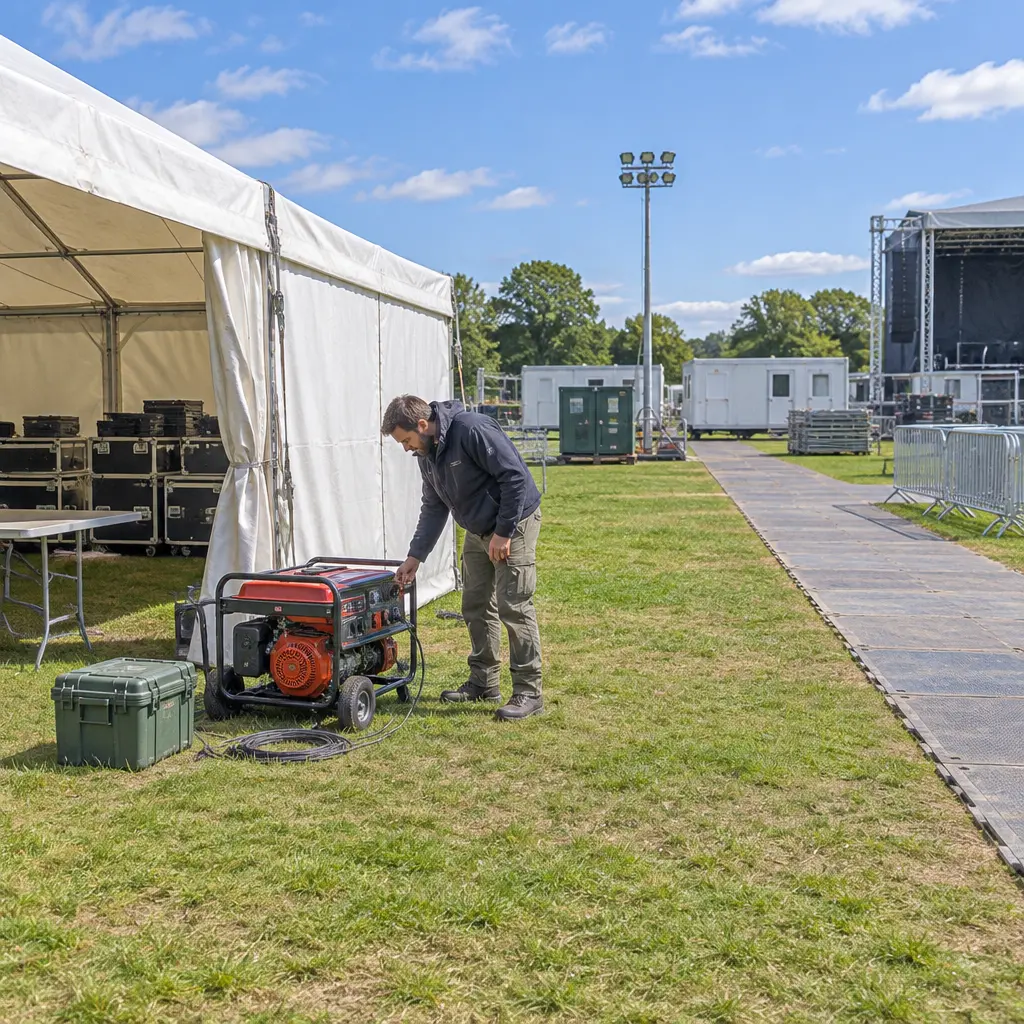
A temporary festival or market may combine tents, stages, food vendors, temporary power, sanitation, ticketing, and traffic controls. A reliability plan would map critical dependencies—for example, payment systems depend on power and network service, while safe crowd movement depends on clear exits and functioning lighting. Weather thresholds, backup communications, accessible routes, generator checks, supplier delivery slots, and a defined teardown sequence help reduce cascading failures.
The Federal Highway Administration’s temporary traffic-control principles are relevant where an event changes road or sidewalk conditions. Local permitting and fire-safety requirements remain decisive, so organizers should coordinate with authorities before site installation rather than relying solely on vendor assurances.
Emergency shelters and mobile services
Emergency shelters, vaccination sites, mobile clinics, and disaster distribution points must continue serving people under uncertain conditions. Their plans should prioritize safe occupancy, accessible service, reliable water and sanitation, medical or information privacy, staff welfare, and a resupply path. FEMA’s resource-management approach is useful here because it links requests, delivery, tracking, and demobilization across multiple organizations.
A practical example is a temporary cooling center opened during extreme heat. The team would verify the building’s cooling capacity, power backup, drinking water, accessible transport and entry, staffing, communications, and escalation process if indoor temperatures rise or power fails. The example illustrates why resilience is not one piece of equipment: it is a coordinated service chain with defined alternatives.
Demobilization and site restoration
Demobilization is the controlled removal of temporary assets, supplies, and staff after the service ends. It should be planned before opening and include asset checks, safe disconnection, waste and wastewater management, return transport, data protection, incident closeout, and restoration of the site. Skipping this phase can create environmental damage, lost equipment, untracked costs, or hazards for the next site user.
A closeout review should compare planned and actual costs, delivery times, service interruptions, inventory use, safety events, and user feedback. Recording lessons in a reusable deployment checklist makes the next activation faster and more reliable, while preserving institutional knowledge when temporary teams disperse.
Conclusion: turns pop-up logistics planning into dependable temporary infrastructure
Pop-up logistics planning supports temporary infrastructure reliability by connecting site assessment, demand forecasting, procurement, transport, utilities, maintenance, staffing, public safety, monitoring, and demobilization. The most important practices are to define service targets, identify critical dependencies, provide proportionate backup, test equipment and procedures, assign decision authority, and learn from incidents. Energy interruption data from the U.S. Energy Information Administration reinforces the need to plan for outages, while FEMA, NIST, and transportation and safety agencies offer established principles for coordinated resource management and resilience.
Organizations planning a temporary site should begin with a hazard and dependency review, then create a concise operating plan with named owners, measurable thresholds, backup arrangements, and a teardown checklist. For further preparation, consult current FEMA emergency-management guidance, applicable local permitting and accessibility requirements, and utility-specific continuity advice before deployment.
Sources: Federal Emergency Management Agency, National Incident Management System, https://www.fema.gov/emergency-managers/nims; National Institute of Standards and Technology, Community Resilience Planning Guide for Buildings and Infrastructure Systems, https://www.nist.gov/community-resilience; U.S. Energy Information Administration, Electric Power Annual, https://www.eia.gov/electricity/annual/; Federal Highway Administration, Manual on Uniform Traffic Control Devices, https://mutcd.fhwa.dot.gov/; National Weather Service, Flood Safety, https://www.weather.gov/safety/flood; U.S. Centers for Disease Control and Prevention, Emergency Water Supply Planning Guide for Hospitals and Health Care Facilities, https://www.cdc.gov/water-emergency/about/index.html; Cybersecurity and Infrastructure Security Agency, Secure Our World, https://www.cisa.gov/secure-our-world; U.S. Access Board, Americans with Disabilities Act Accessibility Standards, https://www.access-board.gov/ada/; National Fire Protection Association, NFPA 101 Life Safety Code, https://www.nfpa.org/codes-and-standards/nfpa-101-standard-development/101; Federal Emergency Management Agency, Incident Command System Resources, https://www.fema.gov/emergency-managers/nims/incident-command-system