
An immersive dining experience is a restaurant visit designed to engage guests through more than food alone: the menu, room, service, sound, lighting, storytelling, and sometimes technology work together to shape how a meal feels. Restaurants build that experience by aligning sensory design with a clear concept, then carrying the concept consistently from booking to the final course. The stakes are meaningful: the National Restaurant Association’s 2024 industry report describes an industry shaped by changing consumer expectations and intense competition, while research on dining and servicescapes shows that environmental cues can influence mood, perceptions, and behavior. The sections below explain how restaurants define the experience, coordinate its sensory and service elements, use technology and narrative, and assess whether the result is memorable as well as operationally sound.
Restaurants Build Immersion Through a Coordinated Dining Experience
A restaurant’s immersive dining experience is the planned combination of food, physical surroundings, human interaction, and narrative that invites guests to feel present in a distinctive setting. There is no single universal industry definition. In servicescape research, Mary Jo Bitner describes the servicescape as the built environment in which service is delivered and customers and employees interact; her framework examines ambient conditions, spatial layout and functionality, and signs, symbols, and artifacts. Applied to restaurants, that framework helps explain how a room can reinforce—or contradict—the promise made by a menu.
Immersion is not synonymous with expensive decoration or theatrical spectacle. Its defining attribute is coherence: lighting, acoustics, menu language, pacing, hospitality, and design support the same idea without making the meal difficult to enjoy. Related forms include themed restaurants, chef-led tasting menus, multisensory dining, interactive service, and technology-enhanced meals. These approaches differ in intensity, but all depend on the fit between the food and the surrounding experience.
Concept and narrative define the experience
A concept is the organizing idea that guides choices, while a narrative gives guests a way to understand and remember that idea. A restaurant might interpret a region, historical period, ingredient, or fictional setting through its menu, interior, staff language, and sequence of courses. The narrative should clarify the food rather than obscure it: a dish’s origin, a producer’s story, or a seasonal ingredient can make a course meaningful without requiring elaborate performance.
The concept also helps operators make practical decisions. If the promise is a calm, ingredient-focused meal, loud sound effects and disruptive table interactions work against it. If the promise is playful participation, a service model that discourages questions may feel inconsistent. A useful planning tool is a guest-journey map that records what guests see, hear, smell, taste, and do at each stage, from reservation and arrival to payment and departure.
The servicescape shapes comfort and perception
The servicescape is the tangible environment where hospitality happens. Bitner’s framework groups its cues into ambient conditions—such as temperature, lighting, scent, and sound—spatial layout and functionality, and signs or objects that communicate meaning. In a dining room, these choices affect more than appearance: table spacing can influence privacy and movement, lighting can affect how food and faces are seen, and acoustic conditions can determine whether conversation is comfortable.
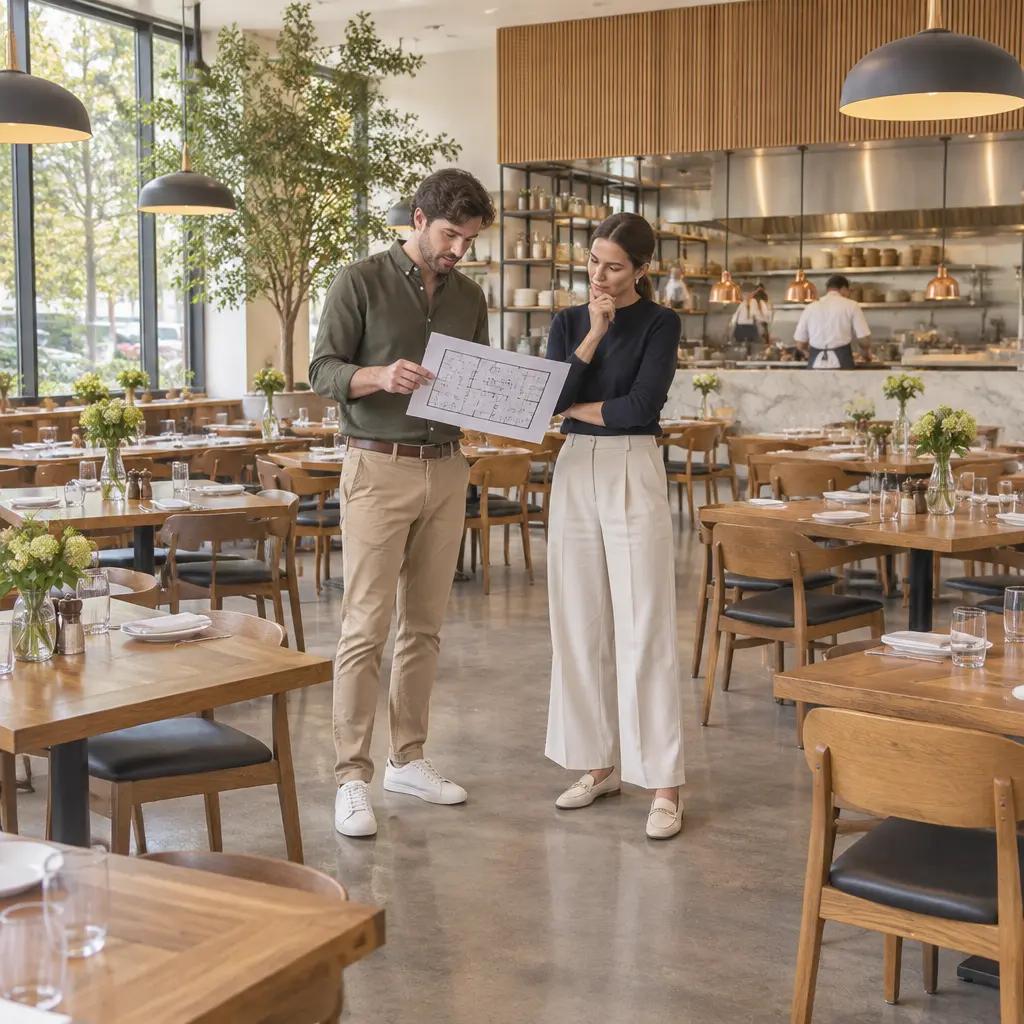
The practical objective is to make the environment legible and usable as well as expressive. Guests need clear wayfinding, comfortable seating, accessible routes, and enough light to read a menu. The U.S. Access Board’s accessibility standards provide requirements for accessible built environments; operators should treat access as part of experience design from the start, rather than a late addition. A useful visual for a planning document is a floor-plan diagram that marks guest flow, service routes, accessible paths, acoustic zones, and focal points.
Menu design connects taste with place
The menu is both a food offer and a narrative device. Ingredients, dish names, descriptions, portion sequence, and beverage pairings can connect guests to a place or idea. A tasting menu can create a deliberate arc, for example, moving from lighter to richer flavors or presenting a progression through a region’s seasons. A concise explanation from a server can add context, but the menu should remain understandable to guests with different levels of culinary knowledge.
Operational discipline is essential to this creative work. The U.S. Food and Drug Administration’s Food Code provides a model for food-safety practices, including controls relevant to handling and serving food. Restaurants must also communicate allergens accurately and accommodate dietary needs within safe operating limits. When the menu’s storytelling depends on ingredients or preparation that change, staff need current information so the experience remains credible and safe.
Restaurants Coordinate Sensory Design and Hospitality
Once a concept is clear, restaurants translate it into sensory cues and human behavior. Sensory design refers to the deliberate use of sight, sound, smell, touch, and taste to support the intended atmosphere. Hospitality provides the responsive human layer: staff notice guest needs, explain the experience, and adjust when a planned interaction does not suit the table. The two must be balanced; sensory stimulation without attentive service can feel like a set, while warm service in a conflicting environment may not deliver the intended concept.
Lighting, color, and materials establish visual atmosphere
Visual design includes illumination, color, surfaces, furniture, tableware, and focal points. These elements tell guests what kind of occasion to expect before the first bite. Warm, localized light may make a room feel intimate, while brighter, more even light can support fast-paced, family-oriented service. Materials and objects can signal craft, locality, modernity, or nostalgia, but they should also withstand cleaning, wear, and food-service conditions.
Design should account for the meal’s practical demands. Guests need to see food clearly, staff need safe working visibility, and glare should not interfere with conversation or service. Rather than relying on a single dramatic lighting effect, operators can test scenes at different times of day and evaluate them from seated and standing positions. A small lighting mock-up or sample table can reveal problems before a full renovation.
Sound and scent influence the room’s feel
Acoustic design manages music, kitchen noise, reverberation, and the sound of conversation. Sound can reinforce a restaurant’s identity, but excessive volume or echo can make communication tiring. The World Health Organization’s environmental-noise guidance identifies noise as a public-health concern, although its environmental recommendations are not restaurant-specific design standards. Restaurants can still use acoustic testing, sound-absorbing finishes, speaker zoning, and staff feedback to improve comfort.
Scent can come from cooking, ingredients, flowers, or other environmental sources. Its strongest use is often subtle: the aroma of bread, coffee, or an open kitchen can connect the room to the food. Added fragrances can compete with dishes, trigger sensitivities, or create an impression of artificiality. A thoughtful sensory plan therefore treats scent as a food-service consideration, not merely a decorative tool.
Service choreography turns the concept into action
Service choreography is the planned timing and coordination of guest-facing actions: greeting, seating, menu explanation, course delivery, clearing, and farewell. It helps a restaurant make a concept consistent without turning staff into scripted performers. Employees need to understand the story, but they also need discretion to adapt their language, pace, and level of interaction to the guests in front of them.
Training should cover product knowledge, allergy communication, accessibility, recovery from service failures, and the reason behind key design choices. The National Restaurant Association’s workforce and industry materials regularly emphasize the importance of staffing and training in restaurant operations. For an immersive format, the additional challenge is coordination: kitchen, floor, bar, and host teams must share the same timing and information. A run-of-show document can help, provided it leaves room for genuine hospitality.
Restaurants Use Technology and Interaction to Extend Immersion
Technology and guest participation can deepen an experience when they serve the concept and remain easy to use. Projection, spatial audio, interactive menus, tableside preparation, and digital storytelling are examples of tools that can make a meal feel participatory. They are not inherently immersive: a screen that distracts from food or a complicated interface can weaken the experience. The design question is whether a tool adds meaning, access, or convenience that the restaurant could not deliver as effectively otherwise.
Projection and digital storytelling add context
Projection and digital media can transform walls, tables, or service areas into story surfaces. A restaurant might use images to show a landscape connected to a dish, or provide optional digital material about farms and producers. The content should be carefully paced and visually restrained so it does not compete with conversation or create discomfort during a meal.
Digital production also introduces maintenance and accessibility needs. Equipment must be tested for brightness, reliability, cleaning, and compatibility with the room’s lighting. Guests should not be required to use a personal device to understand essential menu information. Providing a non-digital route protects the experience for people who prefer paper, have limited connectivity, or use assistive technologies.
Interactive dining invites participation
Interactive dining gives guests a role in the meal, such as choosing a flavor path, finishing a dish, speaking with a chef, or participating in a tableside preparation. The interaction can make a course memorable because guests do something rather than simply observe. It should be optional, clearly explained, and appropriate for the table’s comfort, mobility, dietary requirements, and time constraints.
Participation also requires operational planning. Staff need to know how long an interaction takes, how to manage hot equipment and allergens, and what to do if a guest declines. A simple pilot can reveal whether the activity creates delight or bottlenecks. Restaurants can compare completion rates, guest comments, service times, and safety incidents before expanding the feature.
Restaurants Evaluate Immersive Dining Through Guest and Business Outcomes
An immersive concept should be assessed as both a guest experience and a working business model. Evaluation combines direct feedback with operational measures; no single metric proves that a restaurant is immersive or successful. A restaurant may track satisfaction, repeat visits, reservation conversion, average check, course timing, labor hours, waste, and guest complaints. These measures need context: a longer meal may be intentional for a tasting menu, but it may signal a service problem in a quick-service format.
Guest feedback tests whether the story lands
Guest feedback can reveal whether the experience feels coherent, welcoming, and worth recommending. Useful methods include short post-visit surveys, comment analysis, staff debriefs, reservation notes, and observation of where guests hesitate or disengage. Questions should distinguish among food quality, comfort, service, atmosphere, and value rather than asking only whether guests “liked” the visit.
Restaurants should interpret feedback across guest groups and occasions. A high-energy environment may appeal to some parties and be uncomfortable for others; accessibility concerns may be underreported unless operators actively invite feedback. The U.S. Census Bureau’s household and demographic data can help businesses understand broader community characteristics, but local guest research is needed to determine whether a specific design serves the people who use the restaurant.
Operational measures protect consistency and viability
Operational measures show whether a creative experience can be delivered reliably. Restaurants can review labor requirements, table turns, course delays, equipment downtime, ingredient waste, reservation cancellations, and accessibility or safety issues. The U.S. Bureau of Labor Statistics’ Consumer Expenditure Surveys provide national context on household spending, including food spending categories; they do not establish what an individual guest will pay for a particular immersive meal, so local pricing tests remain important.
A practical improvement cycle is to define the experience promise, pilot a small number of design and service changes, collect guest and operational evidence, and revise the weakest points. For instance, if guests praise a projected landscape but report difficulty hearing servers, the next iteration might retain the visual element while changing speaker levels and course explanations. This approach prevents spectacle from being mistaken for effectiveness.
Real-World Models Show Different Routes to Immersion
Restaurants can create immersion at different price points and levels of theatricality. The common thread is alignment between food, environment, and service rather than a particular technology or interior style.
Chef’s-table formats make process visible
A chef’s table places guests close to food preparation and often includes direct explanation from the kitchen. It can make craftsmanship, ingredient sourcing, and timing part of the meal. The format also demands strong coordination: kitchen noise, sightlines, ventilation, food-safety boundaries, and pacing all shape whether proximity feels special or intrusive.
Place-based restaurants connect menu and setting
Place-based dining builds its identity around a landscape, regional food culture, or local supply network. The concept can appear in seasonal menus, locally sourced materials, maps, producer stories, and staff knowledge. Its credibility depends on accurate claims and meaningful relationships, not just rustic décor. Restaurants should be transparent about sourcing and avoid presenting a region or culture as a visual theme detached from the people who sustain it.
Technology-led dining makes the environment responsive
Technology-led formats use projection, audio, or interactive surfaces to change the room over the course of a meal. They can make a narrative vivid, but depend on reliable equipment and careful control of stimulation. The strongest designs preserve the primacy of food, conversation, and human care, while allowing guests to understand and enjoy the technology without instructions becoming the main event.
Conclusion: Immersion Depends on Coherence, Care, and Testing
Restaurants build an immersive dining experience by connecting a clear concept to the servicescape, menu, sensory design, and service choreography. Technology and participation can extend that experience, but only when they are accessible, reliable, and useful to the story. Guest feedback and operational measures then show whether the design feels memorable while remaining safe, comfortable, and financially workable.
For restaurant owners and designers, the practical next step is to map the guest journey, identify the cues that support the concept, and test changes with real guests and staff. Further reading in servicescape research, accessibility standards, food-safety guidance, and restaurant-industry reporting can help teams make creative decisions that also respect the needs of the people who dine and work there.
Sources: Bitner, Mary Jo, “Servicescapes: The Impact of Physical Surroundings on Customers and Employees,” Journal of Marketing, 1992, https://doi.org/10.1177/002224299205600205; National Restaurant Association, 2024 State of the Restaurant Industry Report, https://restaurant.org/research-and-media/research/research-reports/state-of-the-restaurant-industry/; U.S. Access Board, Americans with Disabilities Act Accessibility Standards, https://www.access-board.gov/ada/; U.S. Food and Drug Administration, Food Code 2022, https://www.fda.gov/food/fda-food-code/food-code-2022; World Health Organization, Environmental Noise Guidelines for the European Region, 2018, https://www.who.int/europe/publications/i/item/9789289053563; U.S. Census Bureau, American Community Survey, https://www.census.gov/programs-surveys/acs; U.S. Bureau of Labor Statistics, Consumer Expenditure Surveys, https://www.bls.gov/cex/.